
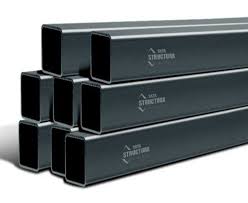
The rapid growth of e-commerce, manufacturing, warehousing, and transportation networks has transformed India’s infrastructure landscape. Logistics parks and industrial corridors are becoming the backbone of economic development, supporting efficient movement of goods, industrial expansion, and regional connectivity. At the heart of these modern infrastructure projects lies one critical component: Structural Steel Pipes.
Structural steel pipes provide the strength, durability, flexibility, and cost-efficiency required to build large-scale logistics hubs, warehouses, distribution centers, manufacturing facilities, and industrial support structures. According to market research, India’s logistics sector is projected to witness significant growth over the coming years, driven by government infrastructure initiatives, industrial corridor development, and increasing investments in supply chain modernization.
As developers seek faster construction methods and long-lasting structural solutions, structural steel pipes have become an essential material for building future-ready logistics and industrial infrastructure.
With over 50 years of experience in steel distribution and infrastructure solutions, Kedia Pipes supports industrial growth across Eastern India through high-quality structural steel products.
Growing Importance of Logistics Parks and Industrial Corridors
India’s infrastructure sector is undergoing a major transformation.
Key growth drivers include:
- Expansion of e-commerce networks
- Industrial corridor development
- Smart city initiatives
- Manufacturing growth
- Warehousing demand
- Transportation infrastructure investments
These developments require durable structural materials capable of supporting large-scale projects efficiently.
What Are Structural Steel Pipes?
Structural steel pipes are hollow steel sections engineered to provide superior load-bearing capacity while maintaining an efficient strength-to-weight ratio.
They are widely used in:
- Logistics parks
- Warehouses
- Distribution centers
- Industrial buildings
- Manufacturing plants
- Infrastructure projects
- PEB structures
Their versatility makes them ideal for modern industrial construction.
Why Structural Steel Pipes Are Preferred
High Strength-to-Weight Ratio
One of the primary advantages of structural steel pipes is their ability to deliver exceptional strength without excessive weight.
Benefits include:
- Reduced structural load
- Lower foundation requirements
- Easier transportation
- Efficient structural design
As a result, projects become more economical and structurally efficient.
Excellent Load-Bearing Performance
Logistics facilities often support heavy operational loads.
Structural steel pipes provide:
- Superior strength
- Enhanced stability
- Reliable structural support
- Long-term durability
This ensures safe and efficient facility operation.
Applications in Logistics Parks
Warehouse Construction
Modern warehouses require large clear-span structures that maximize storage space.
Structural steel pipes support:
- Roof systems
- Structural frames
- Loading zones
- Storage facilities
Their strength allows for efficient warehouse design and operation.
Distribution Centers
Distribution hubs require durable infrastructure capable of handling continuous activity.
Steel pipe structures offer:
- Reliable performance
- Flexibility in design
- Reduced maintenance requirements
Logistics Support Facilities
Additional logistics infrastructure includes:
- Vehicle maintenance facilities
- Administrative buildings
- Service centers
- Utility structures
Structural steel pipes provide dependable support for these facilities.
Applications in Industrial Corridors
Manufacturing Facilities
Industrial corridors attract manufacturing investments that require durable and scalable infrastructure.
Structural steel pipes are used for:
- Production buildings
- Factory frameworks
- Equipment support systems
- Roofing structures
Industrial Warehousing
Manufacturing ecosystems require extensive warehousing capacity.
Steel pipe structures enable:
- Faster construction
- Large-span designs
- Long-term performance
Infrastructure Development
Industrial corridors also require:
- Utility buildings
- Transport infrastructure
- Service facilities
- Support structures
Structural steel pipes contribute to the reliability of these developments.
Benefits of Structural Steel Pipes for Large-Scale Projects
Faster Construction
Time is a critical factor in logistics and industrial development.
Structural steel pipes support:
- Off-site fabrication
- Quick assembly
- Reduced labor requirements
- Faster project completion
Consequently, facilities become operational sooner.
Design Flexibility
Modern infrastructure projects require adaptable structural systems.
Steel pipes allow:
- Large clear spans
- Custom layouts
- Future expansion capabilities
- Architectural flexibility
This makes them suitable for evolving operational requirements.
Cost Efficiency
Developers seek solutions that optimize budgets.
Structural steel pipes help reduce:
- Construction costs
- Material usage
- Installation expenses
- Lifecycle maintenance costs
As a result, project returns improve significantly.
Durability and Reliability
Industrial environments often expose structures to challenging conditions.
Structural steel pipes provide:
- Long service life
- High structural integrity
- Consistent performance
- Reduced maintenance needs
These benefits enhance overall infrastructure reliability.
Sustainability Advantages
Sustainability is becoming a major focus in infrastructure development.
Structural steel pipes contribute through:
Recyclability
Steel is fully recyclable and can be reused without losing structural properties.
Efficient Resource Utilization
High-strength steel allows optimized material consumption.
Reduced Construction Waste
Precision manufacturing minimizes wastage during fabrication.
Long Lifecycle Performance
Durable structures reduce the need for replacements and major repairs.
These advantages support environmentally responsible construction practices.
Market Trends Driving Demand
Industry research highlights several trends fueling demand for structural steel solutions:
Expansion of E-Commerce
The growth of online retail is driving investments in warehousing and logistics infrastructure.
Government Infrastructure Programs
Industrial corridors and freight networks continue to attract significant investment.
Growth of Pre-Engineered Buildings
PEB systems increasingly utilize structural steel pipes for efficiency and scalability.
Smart Industrial Development
Modern industrial zones prioritize durable and sustainable construction materials.
These trends indicate continued growth for structural steel applications.
Why Choose Kedia Pipes?
For more than five decades, Kedia Pipes has supplied trusted steel solutions across Eastern India.
Premium Structural Steel Products
High-quality structural steel pipes designed for strength and durability.
Extensive Industry Expertise
Supporting logistics, warehousing, industrial, and infrastructure projects.
Strong Regional Network
Serving:
- West Bengal
- Bihar
- Jharkhand
- Odisha
- Assam
- North East India
Customer-Focused Support
Helping customers select suitable steel solutions for project-specific requirements.
Conclusion
Structural Steel Pipe Solutions play a crucial role in the development of logistics parks and industrial corridors. Their superior strength, durability, design flexibility, and cost efficiency make them ideal for warehouses, manufacturing facilities, distribution centers, and infrastructure projects.
As India’s logistics and industrial sectors continue to expand, structural steel pipes will remain essential for building resilient, efficient, and future-ready infrastructure. With premium products, industry expertise, and dependable supply capabilities, Kedia Pipes continues to support infrastructure growth across Eastern India.
Strong Steel. Smarter Logistics. Sustainable Industrial Growth with Kedia Pipes.
FAQs
1. Why are structural steel pipes widely used in logistics parks?
They provide strength, durability, large-span capabilities, and efficient construction for logistics facilities.
2. How do structural steel pipes benefit industrial corridor projects?
They support fast construction, long-term reliability, and scalable infrastructure development.
3. Can structural steel pipes be used for warehouse construction?
Yes, they are ideal for warehouse frames, roofing systems, and support structures.
4. Are structural steel pipes suitable for large-span industrial buildings?
Yes, their high strength-to-weight ratio makes them excellent for large clear-span designs.
5. How do steel pipes improve construction efficiency?
They enable faster fabrication, easier assembly, and reduced project timelines.
6. Are structural steel pipes environmentally sustainable?
Yes, steel is recyclable, resource-efficient, and supports sustainable construction practices.
7. Which industries benefit most from structural steel pipe solutions?
Logistics, warehousing, manufacturing, infrastructure, transportation, and industrial development sectors.
📞Contact Kedia Pipes
📍 Serving Across Eastern India
📞 Call: +91-9831282878 / 9831007555 / 8420007174
🌐 Visit: www.kediapipes.com
📩 Email: ajay.agarwal@kediapipes.com | bijit.sarswat@kediapipes.com
Structural Steel Pipes | Logistics Park Construction | Industrial Corridor Infrastructure | Steel Pipe Solutions | Warehouse Structural Systems | Industrial Building Construction | Logistics Infrastructure Development | Pre Engineered Buildings | Steel Warehouse Structures | Distribution Center Construction | Industrial Steel Solutions | Large Span Steel Structures | Sustainable Infrastructure Materials | Structural Steel Frameworks | Industrial Construction Solutions