
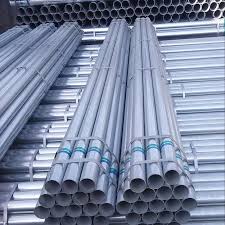
“The strength of every industrial project begins with choosing the right materials in the right dimensions.”
Target Audience
- Industrial Engineers
- Plant Managers
- Builders & Contractors
- Civil Engineers
- Infrastructure Developers
- Mechanical Consultants
- Plumbing Contractors
- Manufacturing Industries
- EPC Contractors
- Facility Management Professionals
Introduction
Selecting the correct Tata GI Pipe size is one of the most critical decisions in any industrial project. Whether designing a manufacturing plant, water distribution network, fire protection system, warehouse, or processing facility, the right pipe diameter and thickness directly influence efficiency, safety, operational costs, and long-term reliability.
Across India’s growing industrial landscape, engineers increasingly prefer Tata GI Pipes because of their excellent corrosion resistance, dimensional accuracy, superior strength, and dependable performance. However, even the highest-quality galvanized pipe must be properly sized to deliver optimal results.
This guide explains how to choose the appropriate Tata GI Pipe size for industrial applications while improving system efficiency and reducing lifecycle costs.
Why Pipe Size Matters in Industrial Projects
Correct pipe sizing affects:
- Water flow efficiency
- Pressure management
- Energy consumption
- Equipment performance
- Maintenance frequency
- Overall project cost
- Operational safety
Oversized or undersized pipes can reduce efficiency and increase long-term expenses.
Understanding Tata GI Pipe Sizes
Diameter Selection
Pipe diameter should be selected based on:
- Required flow rate
- System pressure
- Fluid type
- Pipeline length
- Future expansion
Larger industrial systems typically require larger diameters to maintain efficient flow.
Pipe Thickness
Different applications require different wall thicknesses depending on:
- Operating pressure
- Mechanical load
- Environmental conditions
- Safety requirements
Selecting the correct thickness improves durability and system reliability.
Factors to Consider Before Selecting Pipe Size
Flow Requirement
Estimate current and future demand.
Operating Pressure
Higher pressures require stronger pipe specifications.
Installation Environment
Outdoor, underground, and industrial environments may require additional protection.
Industry Standards
Always follow IS and engineering specifications.
Future Expansion
Allow sufficient capacity for future industrial growth.
Common Causes of Incorrect Pipe Selection
- Choosing based only on price
- Ignoring pressure calculations
- Poor engineering planning
- Using incorrect diameter
- Lack of technical consultation
Signs of Incorrect Pipe Sizing
- Low water pressure
- Excessive pressure loss
- Leakage
- High pumping costs
- Reduced equipment performance
- Frequent maintenance
Benefits of Choosing the Right Tata GI Pipe Size
- Improved operational efficiency
- Better pressure management
- Reduced maintenance
- Longer service life
- Lower energy consumption
- Enhanced safety
- Cost-effective operation
Practical Tips
- Calculate flow requirements accurately.
- Follow engineering design standards.
- Consider future expansion.
- Select genuine Tata GI Pipes.
- Purchase through trusted distributors.
- Consult experienced engineers before procurement.
Real-World Applications
Tata GI Pipes are widely used in:
- Manufacturing plants
- Warehouses
- Industrial utilities
- Fire protection systems
- Water supply projects
- Chemical facilities
- Commercial buildings
- Engineering infrastructure
Expert Advice
Industrial consultants recommend evaluating the complete piping system instead of selecting pipe size solely by diameter. Proper engineering calculations, quality fittings, and genuine Tata GI Pipes together ensure reliable long-term performance while minimizing maintenance costs.
Trusted distributors such as Kedia Pipes assist customers in selecting appropriate Tata GI Pipe specifications for diverse industrial applications.
Common Mistakes to Avoid
- Oversizing pipelines unnecessarily
- Undersizing to reduce initial cost
- Ignoring pressure requirements
- Purchasing from unauthorized suppliers
- Mixing incompatible fittings
- Neglecting future capacity planning
Future Outlook
As industrial automation, smart manufacturing, and infrastructure expansion continue across India, demand for precisely engineered piping systems will increase. Correct pipe sizing will remain essential for achieving operational efficiency, sustainability, and lower lifecycle costs.
Conclusion
Choosing the correct Tata GI Pipe size is essential for ensuring industrial efficiency, safety, and long-term reliability. Proper sizing minimizes operational costs, improves system performance, and extends infrastructure life. By combining sound engineering practices with genuine Tata GI Pipes and expert supplier guidance, industries can build dependable piping systems that deliver value for decades.
Final Thought
“The right pipe size today ensures stronger performance, lower costs, and greater reliability tomorrow.”
Call-to-Action
Looking for genuine Tata GI Pipes and expert guidance for your industrial project? Kedia Pipes offers reliable product availability, technical assistance, and trusted distribution to help you choose the right piping solution with confidence.
📞Contact Kedia Pipes
📍 Serving Across Eastern India
📞 Call: +91-9831282878 / 9831007555 / 8420007174
🌐 Visit: www.kediapipes.com
📩 Email: ajay.agarwal@kediapipes.com | bijit.sarswat@kediapipes.com
Frequently Asked Questions (FAQs)
1. Why is selecting the correct Tata GI Pipe size important?
Proper sizing improves flow efficiency, pressure management, durability, and long-term operational performance.
2. How do engineers determine the correct pipe size?
They evaluate flow rate, pressure, pipeline length, application requirements, and future expansion.
3. Are Tata GI Pipes suitable for industrial applications?
Yes. They are widely used in manufacturing, utilities, commercial buildings, water supply, and infrastructure projects.
4. What happens if the pipe diameter is too small?
Undersized pipes may cause pressure loss, restricted flow, and increased pumping costs.
5. Can oversized pipes create problems?
Yes. Oversized pipes may increase installation costs and reduce system efficiency if improperly designed.
6. Why choose genuine Tata GI Pipes?
They provide certified quality, corrosion resistance, dimensional accuracy, and dependable long-term performance.
7. How can Kedia Pipes help industrial buyers?
Kedia Pipes supplies genuine Tata GI Pipes and assists customers in selecting suitable specifications for industrial and infrastructure projects.
Tata GI Pipes | Tata Galvanized Pipes | Industrial GI Pipes | Industrial Pipe Sizes | GI Pipe Size Guide | Galvanized Steel Pipes | Industrial Piping Solutions | Tata Steel Pipes | Construction Steel Pipes | Plumbing Pipe Solutions | Corrosion Resistant Pipes | Water Supply Pipes | Engineering Infrastructure | Industrial Pipe Supplier | Infrastructure Development